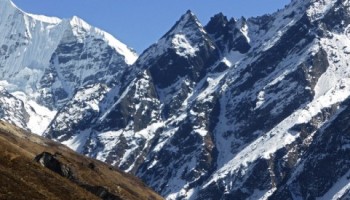
Gokyo Everest View trek 12 days through the point Khumbu region with numerous peaks including Mount Everest (8,848 m), Lhotse (8,516 m), Makalu (8,463 m), and Cho Oyu (8,201 m) is tremendous and adventurous for trekkers on the high Himalayas. Adventurous 12 days trip starts via a flight to Lukla. We cross several mini-settlements, monasteries, flat trails, rhododendron, pine forest, Sagarmatha national park, and suspension bridges to take Namche Bazaar and enjoy the magnificent view of tall towering mountains, tea shops, glaciers, and three lakes takes to Gokyo Valley.
Day 12: Fly back to Kathmandu, and transfer to the hotel.
Cost Includes:
Airport Pick up/Drop off in a private vehicle escorted by our office representative
Farewell dinner at a typical Nepalese Restaurant with a cultural dance show
2 nights’ accommodation at Tourist Standard Hotel in Kathmandu with breakfast on a sharing basis
Accommodation at healthy and comfortable Mountain Lodge is available en-route during the trek (A few nights during the trek with attached bathroom/toilets)
English speaking, First Aid and Eco-trained local trekking guide, Assistance guide as per the group size, porters (2:1)
All the expenses for guide and porters along with Insurance
Domestic Airfare for the sector: Kathmandu/Lukla/Kathmandu
Sagarmatha National Park Fees and Khumbu Permit
Sleeping Bag and Down Jacket during Trek (upon request)
All government and local taxes as applicable
Cost Excludes:
Nepal Visa
International Airfare
Lunch & evening meals while in Kathmandu (Except welcome/farewell dinner)
Travel Insurance
Cost of personal nature expenses, Beverages (Mineral water or Coca-Cola), extra meals, snacks, phone bills, Internet, WiFi, laundry, etc.
The cost incurred during emergencies, evacuations,
Tips for Guide, porters, driver
* This tour can be fully customized as per your requirement.
Day 1: Kathmandu to Lukla to Phakding (2600m)
Morning transfer to the airport for the flight to Lukla. Flying time 40 minutes. At Lukla, your trek crew will be waiting to greet you. Equipment is sorted out, loads are allocated and lunch will be served at Lukla. After lunch walk through Lukla, Keyngma, Choplung villages, and forests then pass Ghat village. Overnight in Phakding.
Day 2: Phakding to Namche Bazaar (3440m)
After breakfast, we follow the bank of the Dudh Koshi River and walk through forests and the villages of Benkar, Chomowa, and Monzo. We enter Sagarmatha National Park, then cross a suspension bridge, pass Jorsalle village and walk alongside Dudh Koshi and Bhote Koshi confluence. A steep ascent brings us to the principal Sherpa village of Namche Bazar. Stay overnight in a lodge.
Day 3: Free day in Namche
Time to explore the village and visit the museum housed in the National Park Head Quarters. There is an exciting display of Sherpa's traditional life and the flora, and fauna of the park. For the more energetic, there is also time to visit the Everest View Hotel with its views of Everest, Ama Dablam, and other peaks in the area.
Day 4: Namche to Dole (4040m)
Follow the Tengboche trail till Syangnasa then take the Gokyo trail to the crest of the ridge (13,097ft). Descend steeply towards Dudh Koshi. Across the river is Phortse (3840m). Taking the left-hand path wherever the trail forks, we head north through Rhododendron forests which give way to Junipers and large Conifers.
Day 5: Dole to Machhermo (4410m)
Continue up the Gokyo valley, passing Yak huts at Lhabarma. The path along the banks of a stream is stepped in places as it ascends through scrub juniper.
Day 6: Machhermo to Gokyo (4750m)
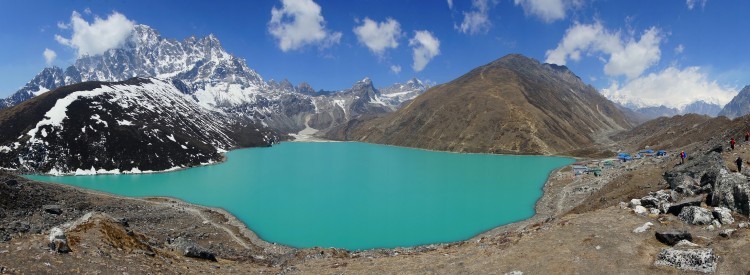
From the ridge beyond Machhermo, there are superb views down the valley to Kangtega and up towards Cho Oyu. There is a relatively level stretch to the huts at Pangka at the foot of the Ngozumpa glacier. A slight descent is followed by a steep climb onto and up the glacier’s terminal moraine to pass the first of several small lakes. Finally, negotiating a boulder-strewn path, we reach the cluster of huts known as Gokyo on the shore of Dudh Pokhari.
Day 7: Gokyo to Gokyo Peak (5360m) to Nah (4440m)
The view from Gokyo is stunning, especially from atop the ridge to the northwest. Some trekkers consider the panorama from Gokyo Kang better than from Kalapather. Those who are well acclimatized can make this summit in three hours and will be rewarded with a stunning view from Cho Oyu via Gyachung Kang, Kangchung, Everest, Lhotse, Makalu, and Jobo Lhaptshan to Tawache, etc. Descend to Gokyo and follow along with a trail on the east side of the Gokyo valley to trek down on the warmer side of the valley to Nah.
Day 8: Nah to Phortse (3840m)
Continue our descent of the valley through summer pastures and the settlement of Konar to Phorste.
Day 9: Phortse to Tengboche (3867m)
The trail we follow now offers fine views of Kangtega, Thamserku, and Ama Dablam, as we make our way to the attractive village of Pangboche. Its monastery is the oldest in the Khumbu region. After lunch, we descend past some marvelously carved Mani stones to the Imja Khola. Cross the wooden bridge and ascend through the few houses of Milinggo and past the Nunnery at Deboche through the thick rhododendron forest to Tengboche, the biggest monastery in the area.
Day 10: Tengboche to Mondzo
A steep descent through rhododendron and pine forest to Phunki Tenga, cross the river and a steep ascent brings us to Tashinga. Himalayan Thar (wild blue sheep) can be seen on the way to Namche. We pass Namche and descend to Monzo.
Day 11: Mandzo to Lukla
We follow the Dudh Koshi downstream until, after Ghat, our last ascent to Lukla.
Day 12: Fly back to Kathmandu
This morning is our last moment in the Himalayas. The guide takes care of all the formalities and considerations at the airport and porters are there to handle your bag and luggage. Catching our flight, it holds 30 to 35 minutes to land at Tribhuwan International Airport. Our private vehicle will be there awaiting your flight to pick you up and to shift towards the fine hotel. On this last night of our trip, we host a special dinner in a Nepalese restaurant enjoying ethnic dance and music with Nepalese dishes.
Please Check Available Dates for The Year of:
Start Date
End Date
Availability
Price
Booking
Visa Information
All visitors are required to arrange a visa to enter Nepal. A Nepalese visa can be easily obtained upon arrival on arrival in Kathmandu at the airport or the Nepalese embassy abroad. But nationals from Afghanistan, Iraq, Cameroon, Ghana, Somalia, Swaziland, Palestine, Zimbabwe, Nigeria, Ethiopia, and Liberia cannot secure the Nepalese Visa upon arrival. The Visa can also be confirmed at the entry points at Nepalese borders. A valid passport for at least six months, a recent digital photo (size: 1.5" x 1.5") will be required and you can obtain visas for Nepal from the Nepalese Consulate in your country or upon arrival at Kathmandu Airport. Nepalese visas cost USD 25 for 15 days and USD 40 for 30 days to date.
Official Papers
Some of the required official documents are your valid passport, 4 extra passport-sized photographs (for trekking permits), travel insurance, airline tickets, and luggage tags. Visas can be obtained upon entry into Nepal.
Weather Information
The weather in the mountains is pretty difficult to predict. Nights are generally cooler and days are warm. The months of winter (January and February) are a bit colder but the days can be quite beautiful and warm if the sun is out. It snows during January, February, and December in the Himalayan areas.
Best time to travel
Nepal offers diversified geographical regions and so the climatic condition differs from the Himalayas to the plains. The climate varies as per the season. Nepal generally offers 4 seasons amongst which autumn and spring are the two most favorable for visiting Nepal. It is always wise to know about the weather and climatic condition of the place you visit. The best time to travel depends on your destination, activities, and season of travel. Our destination specialists will recommend certain travel times after learning more about your preferences. The favorable months for trekking and climbing are usually September – November, and February – April. The monsoon season is June – August.
Physical Fitness
Even though physical fitness plays an important role in trekking you don’t have to be a super athlete or a marathon runner to trek in Nepal. Many people of good fitness for their age can complete the trek. You can prepare yourself beforehand by doing some yoga which will prepare you for your breathing as you will be going to a higher altitude. Running or hiking on hills, or going for a long walk will also help you. And if you live in an urban area running down the stairs of a tall building will also work better in keeping you fit for trekking. Though these preparations aren’t strictly compulsory, you can do well even when the preparations you do aren’t rigorous like that of some ultra-athletic person. Do these things at a moderate pace for two months or even less? And you are set to complete any trekking to Nepal.
Travel Insurance
Doing insurance while trekking in Nepal is not compulsory but will surely help you a lot if you do one, as it covers any comprehensive expenses possible to acquire due to medical issues or accidents. Your travel insurance must protect air ambulance, treatment charges, rescue and evacuation, product cancellation and refundable charges, flight delays, and cancellations. We suggest you bring your travel insurance certificate or send us to scan copy and it must be issued from your homeland. We do not arrange or sell insurance so you can find your local travel insurance for this.
Vaccination for Nepal
All travelers should consult with their physician or update on vaccination requirements before travel. (Your doctor or health-care provider will determine what you will need, depending on factors such as your health and immunization history, areas of the country you will be visiting, and planned activities) For traveling to Nepal; we recommend you take vaccination for Polio, Tetanus, Typhoid, Hepatitis A, Hepatitis B, Rabies, etc, it is not really must but recommended.
Booking Process
While you chose which trip you wanted to go with, contact us at our head office, Thamel Marg, Kathmandu Nepal by email or phone, email is a more easy option, as soon as we get your email or call, we will process your booking. We need a 20% booking amount to confirm your booking, the payment can be made through Bank transfer, Credit card payment (Master/Visa card), or online money transfers also Money Gram, Western Unions, or others. After we get the 20% amount, we will confirm your booking and you will get the official booking and payment receipt. The final balance for the tour will be paid upon arrival in Kathmandu.
Safety Guidelines
Do proper research about the company that you are planning to trek with and make sure they are a legally registered travel agency.
You should be well acquainted with travel health and travel insurance before traveling.
Have an idea about the climate, geography, temperature, and environment of Nepal before starting your trip.
Using credit cards instead of cash is a wiser idea.
The majority of the Nepalese people are nicer but there are a few scammers you will come meet on your way and need to avoid, for example, ‘holy men’ who will try to plant a tika (a red paste denoting a blessing) on your forehead demanding payment for it on streets.
Be careful while buying the medicinal herbs as some may be illegal for you to take home and also be aware of duplicate products.
Never get involved in doing drugs, trafficking, and sexual relations with minors as there are strict rules for these cases, and might get you into a big problem.
Take copies of your passport, visa, air ticket, and trekking permits and keep them separately from the originals.
Prepare yourself for altitude sickness and be familiar with its symptoms so that you can follow the guidelines for safe acclimatization.