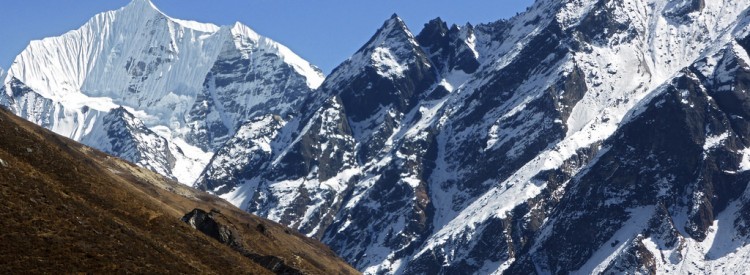
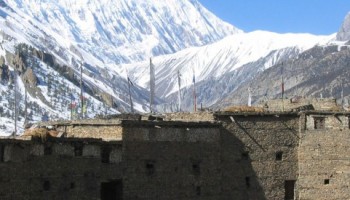
Langtang Valley Trek 10 days is a wonderful excursion in Nepal that starts with voyages through Kathmandu's UNESCO World Heritage Sites pursued by a drive to Syabrubesi the following day. The trekking starts from the lower area of the Langtang Valley through little towns, farmlands, and verdant backwoods to Kyangjin Gompa. We additionally climb Tserko Ri for magnificent dawn sees over the Langtang ranges. The locale outskirts of Tibet and was before an essential exchanging course. We can at present observe the impact in the rich nearby culture. Moreover, the Langtang Valley Trek's schedule likewise takes us to the 'Langtang Village' which was intensely influenced by the staggering tremor that hit Nepal in April 2015.
Day 02: Drive from Kathmandu to Syabrubesi (1,550m) 7-8 hours
Day 03: Trek from Syabrubesi to Lama Hotel (2,380m) 6 hours
Day 04: Trek to Mundu (3543m) via Langtang village: 6-7 hours
Day 05: Mundu to Kyangjin Gompa (3,870m) 4-5 hours
Day 06: Acclimatization- Explore Tserko Ri (5000m) for 7-8 hours
Day 07: Kyangjin Gompa to Lama Hotel 6-7 hours
Day 08: Lama Hotel to Syabrubesi 4-5 hours
Day 09: Syabrubesi to Kathmandu
Day 10: Departure Day
Cost Includes:
Airport / Hotel / Airport pick up & drop off service by a private tourist vehicle.
Farewell dinner in Kathmandu
Twin-sharing accommodation in a tourist standard hotel in Kathmandu including breakfast (3 nights).
Basic guesthouse accommodation during the trek in mostly twin-share and occasionally dormitory-style rooms with all meals (Breakfast, Lunch, and Dinner).
Local licensed English-speaking trekking guide.
The required number of local staff and porters to carry your luggage during the trek (We assign one porter for every two guests.)
Food, accommodation, insurance, equipment, and medicine for all staff.
Langtang National Park permits and TIMS permits for trekking.
Kathmandu to Syabrubesi to Kathmandu transfer in a public sharing vehicle- Option available for private vehicle
All our government taxes, vat, and tourist service charges.
Official expenses.
Cost Excludes:
Nepal arrival visa and International Flight
Dinner and lunch in Kathmandu except for farewell dinner.
Your expenses for mineral water, soft beverages, confectionaries, laundries, phone calls, hot drinking water, bar bills, showers, etc.
Internet facility, battery chargers, multi-plugs, etc.
Extra porter if you require.
Personal trekking equipment.
Your travel insurance covers Medical Expenses Helicopter evacuation and trip cancellation
Tips from the guide, porters, and driver as a token of appreciation.
* This tour can be fully customized as per your requirement.
Day 1: Arrival day in Kathmandu (1,300 m) On the first day focusing on your arrival time, our representatives will be awaiting you at Tribhuwan International Airport for a warm welcome after that you will be further transferred toward ds fine tourist standard hotel. We also schedule a meeting for introducing you to our trekking members.
Day 02: Drive from Kathmandu to Syabrubesi (1,550m) 7-8 hours
We leave Kathmandu in the morning for Syabrubesi, a village that is also the starting point for treks into the Langtang Valley. Our journey will be on a winding road through frequent switchbacks. On a clear day, we get to enjoy outstanding views of Manaslu, Annapurna, and Ganesh Himal. Our trek for today ends with a descent into the small village of Syabrubesi. Overnight in Syabrubesi.
Day 03: Trek from Syabrubesi to Lama Hotel (2,380m) 6 hours
After breakfast, we begin our trek to Syabrubesi along the Langtang Khola. We ascend and descend simultaneously through oak and rhododendron forests. After crossing a bridge over the Langtang Khola (small river), we ascend a steep trail that will lead us to the Lama Hotel. Overnight in a hotel.
Day 04: Trek to Mundu (3543m) via Langtang village: 6-7 hours
We continue ascending from Lama Hotel and enjoy the mountain landscape with abundant waterfalls. As we reach the green meadows of Ghoda Tabela, we begin to see the white peaks of the Langtang range. Our trail continues to climb up the widening valley, passing a few temporary settlements used by herders. We pass a Buddhist monastery before reaching the Langtang village which was affected by the April 2015 earthquake. We continue on our trail to Mundu. Overnight in Mundu.
Day 05: Mundu to Kyangjin Gompa (3,870m) 4-5 hours
After breakfast, we will start our journey to Kyangjin Gompa, a principal monastery in the region. We pass by water mills, prayer wheels, and Chortens, with sacred mounds of rocks with inscriptions carved on them. We also pass by the largest mani wall in Nepal, made from stone with prayers written on them. After the short trek, we spend the rest of the afternoon exploring the Buddhist shrine in Kyangjin Gompa and the surrounding areas with amazing views of the mountains.
Day 06: Acclimatization- Explore Tserko Ri (5000m) for 7-8 hours
We spend the whole day exploring Tserko Ri which will also help us acclimatize to the high altitude. We begin early in the morning. The trail passes through yak pastures before ascending to Tserko Ri. The sunrise view from the top of Tserko Ri is extraordinary. We get back to Kyangjin Gompa by late afternoon and explore the beautiful monastery while enjoying views of the Himalayas, glaciers, birds, and yaks.
Day 07: Kyangjin Gompa to Lama Hotel 6-7 hours
We begin our trek after breakfast and retrace our steps to Lama Hotel. Most of the trekking today will be downhill as we pass through forests and beautiful Tamang villages. We also get to enjoy a different view of the Himalayas that we had missed climbing up. Overnight in hotel
Day 08: Lama Hotel to Syabrubesi 4-5 hours
We retrace our steps back to Syabrubesi. The trek will be easier as it will mostly involve descending. We stay overnight in one of the hotels in Syabrubesi.
Day 09: Syabrubesi to Kathmandu
After breakfast, we drive back to Kathmandu. After you reach Kathmandu we host a farewell dinner in one of the finest restaurants in the town. Overnight in Kathmandu in a hotel.
Day 10: Departure Day
On the seventeenth day the last day of your trip, you can go for quick shopping to collect some gifts and memories for your loved ones. We help you with your necessary arrangements and pack-ups along with our private vehicle transfers you to the airport focusing on your departure schedule. Our representatives will be there at the airport to wish you a safe flight and successful steps ahead.
Please Check Available Dates for The Year of:
Start Date
End Date
Availability
Price
Booking
Visa Information
All visitors are required to arrange a visa to enter Nepal. A Nepalese visa can be easily obtained upon arrival on arrival in Kathmandu at the airport or the Nepalese embassy abroad. But nationals from Afghanistan, Iraq, Cameroon, Ghana, Somalia, Swaziland, Palestine, Zimbabwe, Nigeria, Ethiopia, and Liberia cannot secure the Nepalese Visa upon arrival. The Visa can also be secured at the entry points at Nepalese borders. A valid passport for at least six months, a recent digital photo (size: 1.5" x 1.5") will be required and you can obtain visas for Nepal from the Nepalese Consulate in your country or upon arrival at Kathmandu Airport. Nepalese visas cost USD 25 for 15 days and USD 40 for 30 days to date.
Official Papers
Some of the required official documents are your valid passport, 4 extra passport-sized photographs (for trekking permits), travel insurance, airline tickets, and luggage tags. Visas can be obtained upon entry into Nepal.
Weather Information
The weather in the mountains is pretty difficult to predict. Nights are generally cooler and days are warm. The months of winter (January and February) are a bit colder but the days can be quite beautiful and warm if the sun is out. It snows during January, February, and December in the Himalayan areas.
Best time to travel
Nepal offers diversified geographical regions and so the climatic condition differs from the Himalayas to the plains. The climate varies as per the season. Nepal generally offers 4 seasons amongst which autumn and spring are the two most favorable ones for visiting Nepal. It is always wise to know about the weather and climatic condition of the place you visit. The best time to travel depends on your destination, activities, and season of travel. Our destination specialists will recommend certain travel times after learning more about your preferences. The favorable months for trekking and climbing are usually September – November, and February – April. The monsoon season is June – August.
Physical Fitness
Even though physical fitness plays an important role in trekking you don’t have to be a super athlete or a marathon runner to trek in Nepal. Many people of good fitness for their age can complete the trek. You can prepare yourself beforehand by doing some yoga which will prepare you for your breathing as you will be going to a higher altitude. Running or hiking on hills, or going for a long walk will also help you. And if you live in an urban area running down the stairs of a tall building will also work better in keeping you fit for trekking. Though these preparations aren’t strictly compulsory, you can do well even when the preparations you do aren’t rigorous like that of some ultra-athletic person. Do these things at a moderate pace for two months or even less? And you are set to complete any trekking to Nepal.
Travel Insurance
Doing insurance while trekking in Nepal is not compulsory but will surely help you a lot if you do one, as it covers any comprehensive expenses possible to acquire due to medical issues or accidents. Your travel insurance must protect air ambulance, treatment charges, rescue and evacuation, product cancellation and refundable charges, flight delays, and cancellations. We suggest you bring your travel insurance certificate or send us to scan copy and it must be issued from your homeland. We do not arrange or sell insurance so you can find your local travel insurance for this.
Vaccination for Nepal
All travelers should consult with their physician or update on vaccination requirements before travel. (Your doctor or health-care provider will determine what you will need, depending on factors such as your health and immunization history, areas of the country you will be visiting, and planned activities) For traveling to Nepal; we recommend you take vaccination of Polio, Tetanus, Typhoid, Hepatitis A, Hepatitis B, Rabies, etc, it is not really must but recommended.
Booking Process
While you chose which trip you wanted to go with, contact us at our head office, Thamel Marg, Kathmandu Nepal by email or phone, email is a more easy and clear option, as soon as we get your email or call, we will process your booking. We need a 20% booking amount to confirm your booking, the payment can be made through Bank transfer, Credit card payment (Master/Visa card), or online money transfers also Money Gram, Western Unions, or others. After we get the 20% amount, we will confirm your booking and you will get the official booking and payment receipt. The final balance for the tour will be paid upon arrival in Kathmandu.
Safety Guidelines
Do proper research about the company that you are planning to trek with and make sure they are a legally registered travel agency.
You should be well acquainted with travel health and travel insurance before traveling.
Have an idea about the climate, geography, temperature, and environment of Nepal before starting your trip.
Using credit cards instead of cash is a wiser idea.
The majority of the Nepalese people are nicer but there are a few scammers you will come meet on your way and need to avoid, for example, ‘holy men who will try to plant a tika (a red paste denoting a blessing) on your forehead demanding payment for it on streets.
Be careful while buying the medicinal herbs as some may be illegal for you to take home and also be aware of duplicate products.
Never get involved in doing drugs, trafficking, and sexual relations with minors as there are strict rules for these cases, and might get you into a big problem.
Take copies of your passport, visa, air ticket, and trekking permits and keep them separately from the originals.
Prepare yourself for altitude sickness and be familiar with its symptoms so that you can follow the guidelines for safe acclimatization.